Nota Medik
Atopic Eczema: Diagnosis, IGA Severity, Topical Steroid Potency, Fingertip Units & Doses
Contents
- Key recommendations
- Diagnosis
- Investigations
- Severity and quality of life
- Investigator's Global Assessment (IGA)
- Primary care pathway (Algorithm 1)
- Treatment steps
- Co-morbidities and triggers
- Emollients
- Topical corticosteroids
- Potency classes
- Children and sensitive sites
- How to apply TCS
- Fingertip units
- TCS doses
- Topical calcineurin inhibitors
- Wet wrap therapy
- Six steps of wet wrap therapy
- Phototherapy
- Antihistamines
- Systemic therapy
- Systemic doses
- Infection and antiseptics
- Bathing, diet and education
- Written eczema action plan
- Traditional and complementary medicine
- When to refer
- Sources
The CPG Management of Atopic Eczema (2018) in one place: how to diagnose it, how to grade it, the four treatment steps, which topical steroid sits in which potency class, how much to apply, the doses of the systemic drugs, and when to refer. Recommendations, tables and doses are copied word for word from the CPG (© MaHTAS, Ministry of Health Malaysia). Text in plain paragraphs is ours, pointing to where the CPG says it.
The CPG was issued in 2018 and was due for review in 2022. It is still the edition MaHTAS publishes.
Key recommendations
Key Recommendations
- Serum immunoglobulin E levels, skin prick test, patch test and skin biopsy, should not be used as diagnostic tools for atopic eczema.
- Assessment of disease severity and quality of life should be used in the management of atopic eczema.
- Emollient therapy is the mainstay of management at any stage of atopic eczema.
- Topical corticosteroids (TCS) should be used to treat flares in atopic eczema (AE).
- The choice of TCS in AE depends on the:
- age of the patient
- location of skin lesions
- severity of skin inflammation
- Topical calcineurin inhibitors may be considered for atopic eczema patients aged two years and above.
- Ultraviolet A1 may be used to control acute flares in atopic eczema (AE).
- Narrow-band ultraviolet B may be offered in moderate to severe chronic AE.
- Systemic corticosteroids may be considered for short-term control of severe acute exacerbation of atopic eczema (AE).
- Azathioprine, cyclosporin A, methotrexate or mycophenolate may be used in the treatment of severe AE after optimisation of topical treatment.
- Educational interventions should be considered as part of the management of atopic eczema.
The key recommendations are a short form of the numbered ones below, and three of them are worded a little differently there: Recommendation 3 says "treatment" and adds "in all age groups of patients", Recommendation 4 adds the chronicity of the lesions and says "site" for "location", and Recommendation 5 limits calcineurin inhibitors to treating flares. Both versions are shown as printed.
Diagnosis
The CPG says atopic eczema (AE) is diagnosed clinically, and that the U.K. Working Party's criteria are the tool most used locally (Section 2.1):
The U.K. Working Party's Diagnostic Criteria for Atopic Dermatitis
Patient must have an itchy skin condition (or parental report of scratching or rubbing in a child) plus three or more of the following:
- history of involvement of the skin creases such as folds of elbows, behind the knees, fronts of ankles or around the neck (including cheeks in children under 10 years old)
- a personal history of asthma or hay fever (or history of atopic disease in a first-degree relative in children under four years old)
- a history of a general dry skin in the last year
- visible flexural eczema (or eczema involving the cheeks/forehead and outer limbs in children under four years old)
- onset under the age of two (not used if child is under four years old)
Hanifin and Rajka criteria (Appendix 3)
Must have 3 or more basic features:
- Pruritus
- Typical morphology and distribution:
- Flexural lichenification or linearity in adults
- Facial and extensor involvement in infants and children
- Chronic or chronically-relapsing dermatitis
- Personal or family history of atopy (asthma, allergic rhinitis, atopic dermatitis)
Plus 3 or more minor features:
- Xerosis
- Ichthyosis/palmar hyperlinearity/keratosis pilaris
- Immediate (type 1) skin test reactivity
- Elevated serum IgE
- Early age of onset
- Tendency toward cutaneous infections (especially Staphylococcus aureus and Herpes simplex)/impaired cell-mediated immunity
- Tendency toward non-specific hand or foot dermatitis
- Nipple eczema
- Cheilitis
- Recurrent conjunctivitis
- Dennie-Morgan infraorbital fold
- Keratoconus
- Anterior subcapsular cataracts
- Orbital darkening
- Facial pallor/facial erythema
- Pityriasis alba
- Anterior neck folds
- Itch when sweating
- Intolerance to wool and lipid solvents
- Perifollicular accentuation
- Food intolerance
- Course influenced by environmental/emotional factors
- White dermographism/delayed blanch
Source (as printed in the CPG): Hanifin JM. Diagnostic features of atopic dermatitis. Acta Derm Venereol (Suppl). 1980; 92:44-7.
Investigations
On tests the CPG says (Section 2.2): "Skin prick test and patch test are only useful to exclude concomitant environmental and food allergies, and contact dermatitis respectively. Skin biopsy is sometimes used to exclude other AE mimickers."
Recommendation 1
- Serum immunoglobulin E levels, skin prick test, patch test and skin biopsy, should not be used as diagnostic tools for AE.
Severity and quality of life
For everyday practice the CPG advises grading severity with the IGA and quality of life with the DLQI (adults) or CDLQI (children). SCORAD, EASI, SASSAD and POEM are, in its words, "mainly used for research purposes" (Section 3).
Recommendation 2
- Assessment of disease severity and quality of life should be used in the management of atopic eczema. The preferred tools are:
- Investigator's Global Assessment
- Dermatology Life Quality Index/Children's Dermatology Life Quality Index
Investigator's Global Assessment (IGA)
Appendix 4 of the CPG:
| Score | Description |
|---|---|
| 0 = Clear | No inflammatory signs of atopic eczema |
| 1 = Almost clear | Just perceptible erythema, and just perceptible papulation/infiltration |
| 2 = Mild disease | Mild erythema, and mild papulation/infiltration |
| 3 = Moderate disease | Moderate erythema, and moderate papulation/infiltration |
| 4 = Severe disease | Severe erythema, and severe papulation/infiltration |
| 5 = Very severe disease | Severe erythema, and severe papulation/infiltration with oozing/crusting |
The copy of this table under Algorithm 1 prints "population/infiltration"; Appendix 4's "papulation" is shown here.
The DLQI and CDLQI questionnaires themselves (Appendices 5 and 6) belong to Cardiff University's Department of Dermatology and are not reproduced here.
Primary care pathway (Algorithm 1)
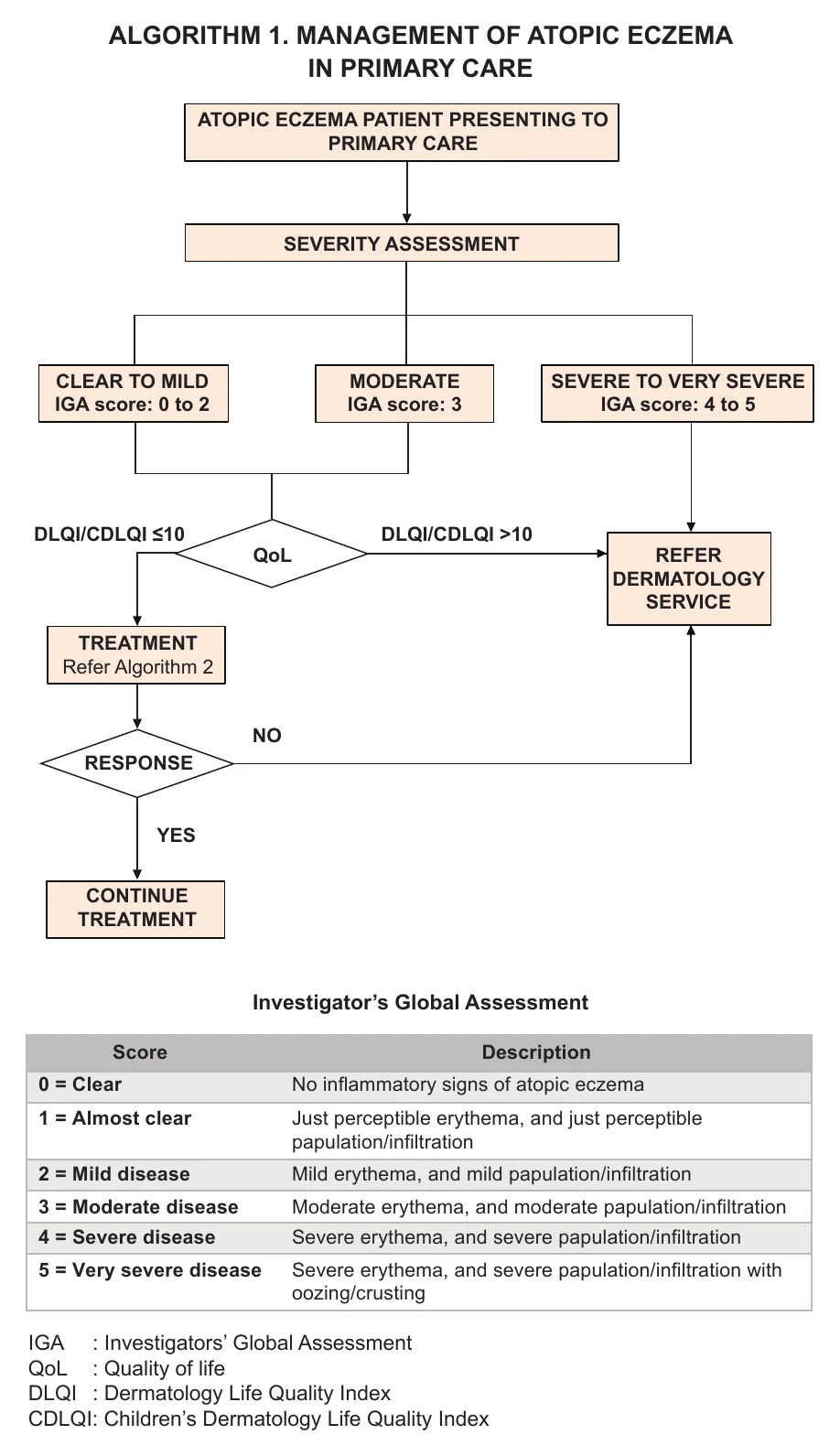
The same algorithm set out in steps:
- Assess severity with the IGA.
- Severe to very severe (IGA score: 4 to 5): refer dermatology service.
- Clear to mild (IGA score: 0 to 2) or moderate (IGA score: 3): assess quality of life.
- DLQI/CDLQI >10: refer dermatology service.
- DLQI/CDLQI ≤10: treatment (Algorithm 2, below).
- Response? Yes: continue treatment. No: refer dermatology service.
Treatment steps
Algorithm 2, Treatment of Atopic Eczema. Step 1 runs under every step; each step adds to the one before. Treatment moves up a step as AE worsens and down as it improves.
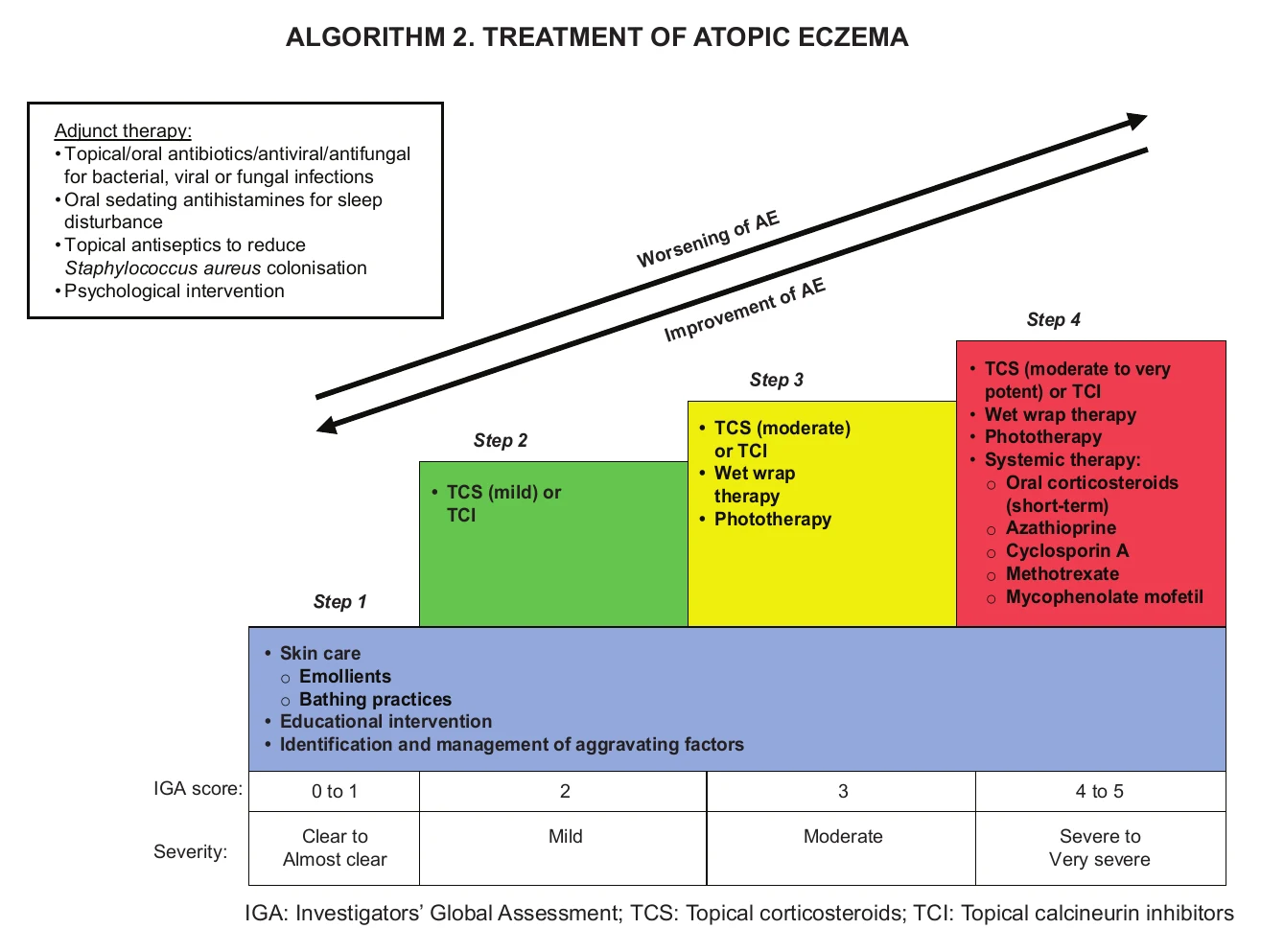
The same steps as a table:
| Step | IGA score | Severity | Treatment |
|---|---|---|---|
| Step 1 | 0 to 1 | Clear to Almost clear |
|
| Step 2 | 2 | Mild |
|
| Step 3 | 3 | Moderate |
|
| Step 4 | 4 to 5 | Severe to Very severe |
|
Adjunct therapy: Topical/oral antibiotics/antiviral/antifungal for bacterial, viral or fungal infections; Oral sedating antihistamines for sleep disturbance; Topical antiseptics to reduce Staphylococcus aureus colonisation; Psychological intervention. IGA: Investigators' Global Assessment; TCS: Topical corticosteroids; TCI: Topical calcineurin inhibitors.
Co-morbidities and triggers
- Co-morbidities e.g. skin infection, atopic disease, food allergy, cardiovascular disease, psychological and psychosocial dysfunction may co-exist in AE.
On infection the CPG adds (Section 4.1): "eczema herpeticum should be suspected in patients with rapidly deteriorating AE."
The aggravating or triggering factors it lists (Section 5) are aeroallergen, physical irritants, environmental factors, food, microbial colonisation/infection, and patient factors (e.g. pregnancy).
On food (Section 5.4): "a diagnosis of food allergy should be considered in children with AE who have reacted previously to a food with immediate symptoms, or in infants and young children with moderate to severe AE that has not been controlled by optimum management. Food may worsen AE in children less than two years old especially milk, egg and peanuts."
- Identification and management of aggravating factors is important in AE.
Emollients
The CPG found "no reliable evidence to show that one emollient is more effective than another" (Section 6.1).
- Regular use of emollients improves AE and thus reduces usage of topical corticosteroids.
Recommendation 3
- Emollient therapy is the mainstay of treatment at any stage of atopic eczema in all age groups of patients.
- The type/formulation of emollients depends on the patient's preference.
Topical corticosteroids
Potency classes
Appendix 7, Topical Corticosteroids Class and Potency (UK Classification):
| Class & Potency | Drug (Generic Name) |
|---|---|
| Class I (Very Potent) | Clobetasol propionate 0.05% cream/ointment |
| Class II (Potent) | Betamethasone dipropionate 0.05% cream/ointment Betamethasone valerate 0.1% cream/ointment Diflucortolone valerate 0.1% cream Fluocinolone acetonide 0.025% cream Fluticasone propionate 0.05% cream Mometasone furoate 0.1% cream/ointment Triamcinolone acetonide 0.1% cream |
| Class III (Moderate) | Betamethasone valerate 1 in 2 dilution (0.05%) cream/ointment Betamethasone valerate 1 in 4 dilution (0.025%) cream/ointment Clobetasone butyrate 0.05% cream/ointment |
| Class IV (Mild) | Betamethasone valerate 1 in 8 dilution (0.0125%) cream/ointment Betamethasone valerate 1 in 10 dilution (0.01%) cream/ointment Hydrocortisone acetate 1% cream/ointment |
Adapted (as printed in the CPG): British National Formulary (BNF). 69th edition. London: British Medical Association and Royal Pharmaceutical Society of Great Britain, 2015.
Children and sensitive sites
From Section 6.2: "Children have an increased absorption of TCS due to a greater body surface area to weight ratio. Therefore, the least-potent but effective TCS should be used. However, during acute flares, the use of short courses of moderate to very potent TCS can be considered for rapid control. For certain areas (i.e. face, neck, genitalia and skin folds), caution should be exercised with regards to choice of TCS potency due to greater penetration and higher likelihood for systemic absorption."
On side effects: "The potential systemic side effects, including hypothalamic-pituitary-adrenal (HPA) axis suppression, should be monitored particularly in children with AE on long-term potent TCS. However, HPA suppression is not observed in patients treated with mild-potency TCS."
How to apply TCS
- Practical guides for TCS application are as the following.
- TCS should be used concomitantly with emollients.
- FTU can be used as a guide to the amount of TCS required for affected sites.
- Choice of vehicle of TCS depends on the affected sites (i.e. gel for scalp; cream for face, genital and flexural areas; ointment for palm and sole).
- Choice of potency of TCS depends on the clinical severity of eczema (i.e. potent to very potent TCS ointment for thick lesions and mild to moderate TCS cream for thin lesions).
- After resolution of eczema flares, discontinuation of TCS application should be done gradually to avoid rebound (i.e. twice a day followed by once a day then 1 - 3 times a week before complete discontinuation).
- After resolution of eczema flares, proactive therapy (mild TCS application intermittently once/twice a week) can be used to maintain remission.
Recommendation 4
- Topical corticosteroids (TCS) should be used to treat flares in atopic eczema (AE).
- The choice of TCS in AE depends on the:
- age of the patient
- site of skin lesions
- chronicity of skin lesions
- severity of skin inflammation
- The use of TCS should be monitored every 3 - 6 months to determine response and potential side effects.
Fingertip units
Appendix 8 of the CPG. Use index finger (first finger) to measure. One fingertip unit (FTU) is the amount of cream squeezed along index finger from tip to the first joint. 1 FTU = 0.5 g (covers the size of two palms of adult).
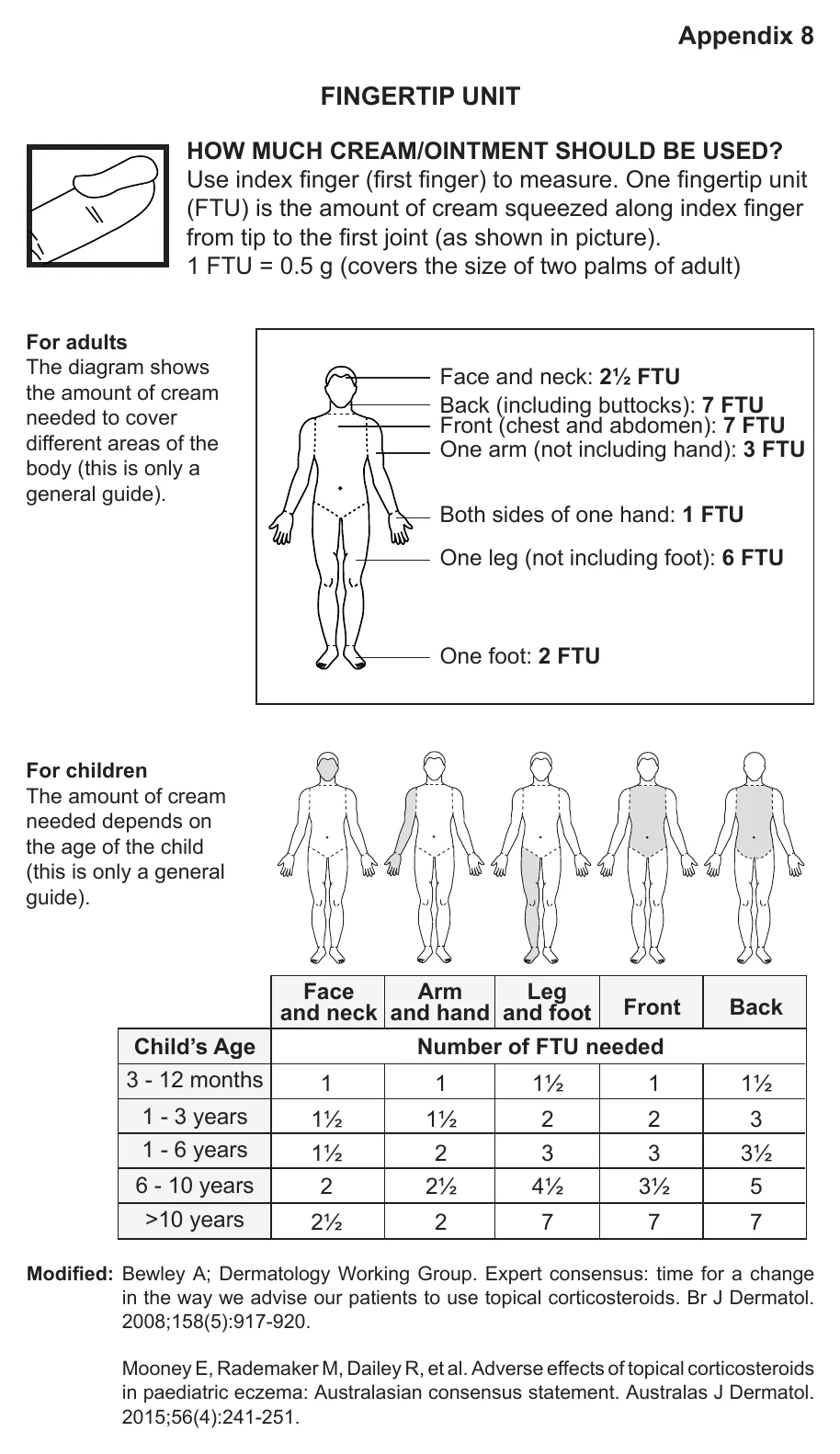
For adults (this is only a general guide):
| Area | FTU |
|---|---|
| Face and neck | 2½ FTU |
| Back (including buttocks) | 7 FTU |
| Front (chest and abdomen) | 7 FTU |
| One arm (not including hand) | 3 FTU |
| Both sides of one hand | 1 FTU |
| One leg (not including foot) | 6 FTU |
| One foot | 2 FTU |
For children, the amount of cream needed depends on the age of the child (this is only a general guide). Number of FTU needed:
| Child's Age | Face and neck | Arm and hand | Leg and foot | Front | Back |
|---|---|---|---|---|---|
| 3 - 12 months | 1 | 1 | 1½ | 1 | 1½ |
| 1 - 3 years | 1½ | 1½ | 2 | 2 | 3 |
| 1 - 6 years | 1½ | 2 | 3 | 3 | 3½ |
| 6 - 10 years | 2 | 2½ | 4½ | 3½ | 5 |
| >10 years | 2½ | 2 | 7 | 7 | 7 |
The age bands are as printed: "1 - 3 years" and "1 - 6 years" overlap in the CPG's table. Modified (as printed in the CPG) from Bewley A, Br J Dermatol 2008;158(5):917-920, and Mooney E et al., Australas J Dermatol 2015;56(4):241-251.
TCS doses
Appendix 11, Recommended Medication Dosing, Side Effects and Contraindications for Commonly Used Medications in Atopic Eczema. The CPG prints the topical steroids over two pages, each with its own merged side-effect, contraindication and precaution cells; both are shown as printed.
| Drug | Recommended dosage | Possible side effects | Contraindications | Special precautions |
|---|---|---|---|---|
| Mild | ||||
| Betamethasone Valerate 1 in 10 dilution (0.01%) Cream/Ointment | 1 - 2 times daily | Worsening of untreated infection, contact dermatitis, perioral dermatitis, acne, depigmentation, dryness, hypertrichosis, secondary infection, skin atrophy, pruritus, tingling/stinging, rosacea, folliculitis, photosensitivity | Untreated bacterial, fungal or viral skin lesions in rosacea and perioral dermatitis |
|
| Betamethasone Valerate 1 in 8 dilution (0.0125%) Cream/Ointment | ||||
| Hydrocortisone Acetate 1% Cream/Ointment | ||||
| Moderate | ||||
| Betamethasone Valerate 1 in 2 dilution (0.05%) Cream/Ointment | 1 - 2 times daily | |||
| Betamethasone Valerate 1 in 4 dilution (0.025%) Cream/Ointment | ||||
| Clobetasone Butyrate 0.05% Cream/Ointment | ||||
| Drug | Recommended dosage | Possible side effects | Contraindication | Special precautions |
|---|---|---|---|---|
| Potent | ||||
| Betamethasone Dipropionate 0.05% Cream/Ointment | 1 - 2 times daily | Worsening of untreated infection, contact dermatitis, perioral dermatitis, acne, depigmentation, dryness, hypertrichosis, secondary infection, skin atrophy, pruritus, tingling/stinging, rosacea, folliculitis, photosensitivity | Untreated bacterial, fungal or viral skin lesions, in rosacea and perioral dermatitis |
|
| Betamethasone Valerate 0.1% Cream/Ointment | ||||
| Fluocinolone Acetonide 0.025% Cream | ||||
| Fluticasone Propionate 0.05% Cream | ||||
| Triamcinolone Acetonide 0.1% Cream | ||||
| Mometasone Furoate 0.1% Cream/Ointment | Once daily | |||
| Very Potent | ||||
| Clobetasol Propionate 0.05% Cream/Ointment | 1 - 2 times daily | |||
Topical calcineurin inhibitors
The CPG notes that TCIs (tacrolimus, pimecrolimus) "are currently licensed to be used in patients older than two years old" and that "the most common adverse events in TCIs are burning, pruritus and skin infection" (Section 6.3).
- Proactive treatment with TCIs 2 - 3 times weekly may be considered for maintenance therapy in AE.
Recommendation 5
- Topical calcineurin inhibitors may be considered to treat flares in atopic eczema for patients aged two years and above.
From Appendix 11:
| Drug | Recommended dosage | Possible side effects | Contraindication | Special precautions |
|---|---|---|---|---|
| Tacrolimus 0.03% - 0.1% Ointment | Twice daily | Burning, stinging, soreness, pruritus, skin disorders, headache, flu-like symptoms | Hypersensitivity to tacrolimus. | Use in patients with Netherton's syndrome or other skin diseases with barrier defect is not recommended |
| Pimecrolimus 1% Cream | Twice daily | Application site reactions, risk for infections, headache, fever | Hypersensitivity to pimecrolimus. | Only to be used in children age two years and older |
Wet wrap therapy
Wet wrap therapy (WWT) is two layers of tubular bandage or garment, the inner wet and the outer dry, over moisturiser alone or with a TCS. The CPG adds (Section 6.4): "WWT with TCS should only be used to treat AE in children for 7 - 14 days. However, WWT with emollients alone can be continued until the AE is controlled."
Recommendation 6
- Wet wrap therapy (WWT) with moisturiser alone or in combination with mild to moderate potency topical corticosteroids (TCS) may be used in non-infected moderate to severe atopic eczema.
- The use of TCS in WWT should not exceed 14 days.
Six steps of wet wrap therapy
Appendix 9 of the CPG:
- Prepare the wet wrap/garment by soaking it in luke warm water and wring dry
- After a bath, apply emollients all over the body
- Apply prescribed anti-inflammatory medications over affected sites
- Apply the wet wrap/garment over the affected sites
- Apply a second layer of dry wrap/garment over the wet one
- Periodically wet the inner layer to keep it moist
Phototherapy
The CPG places phototherapy for "patients with severe AE who do not respond or develop side effects to conventional treatment", and notes that "In the local settings NB-UVB is widely available; hence it is more commonly used" (Section 7).
Recommendation 7
- Ultraviolet A1 may be used to control acute flares in atopic eczema (AE).
- Narrow-band ultraviolet B may be offered in moderate to severe chronic AE.
Antihistamines
From Section 8.1: "In the absence of urticaria and other atopic conditions, non-sedating antihistamines are not recommended as a treatment for AE." The CPG names no antihistamine and gives no dose.
Recommendation 8
- Antihistamines should not be used as monotherapy or to substitute topical therapy in atopic eczema (AE).
- Sedating antihistamines may be considered as a short-term measure at bedtime in AE patients with sleep disturbance.
Systemic therapy
The CPG keeps specific systemic treatment for "severe cases of AE in patients where other management options have failed or are not appropriate, and where the AE has a significant impact on quality of life" (Section 8). On systemic steroids, its two systematic reviews "showed no serious adverse event when steroids were used for 2 - 4 weeks" (Section 8.2).
- Baseline TPMT testing is advised prior to AZA initiation, with avoidance of use in those with very low or absent enzyme activity.
Recommendation 9
- Systemic corticosteroids may be considered for short-term control of severe acute exacerbation of atopic eczema (AE).
- Azathioprine, cyclosporin A, methotrexate or mycophenolate may be used in the treatment of severe AE after optimisation of topical treatment.
- Dupilumab is a potential biologic therapy in adult patients with moderate to severe AE after optimisation of conventional therapy.
The CPG gives no dose for dupilumab.
Systemic doses
Appendix 11, Systemic (Oral) Immunomodulating Agents:
| Drug | Recommended dosage | Possible side effects | Contraindication | Special precautions |
|---|---|---|---|---|
| Azathioprine | 1 - 3 mg/kg daily (Off-label use) | Nausea, vomiting, pancreatitis, pericarditis, bone marrow depression (dose-related) characterised by anaemia, leukopenia, thrombocytopenia and rarely, aplastic anaemia, acute myeloid leukaemia, hematological toxicity, hypersensitivity reaction (Stevens-Johnson's syndrome, toxic epidermal necrolysis), hepatotoxicity | Hypersensitivity to azathioprine, history of treatment with alkylating agents (e.g. chlorambucil, cyclophosphamide) |
|
| Cyclosporine A/Ciclosporin | 2.5 - 5 mg/kg daily in two divided doses | Hypertension, hepatoxicity, tremor, paraesthesia, hypertrichosis, oedema, acne, gingival hypertrophy, hyperkalaemia, increased susceptibility to infections, nephrotoxicity, seizures | Hypersensitivity to cyclosporine, concomitant phototherapy |
|
| Methotrexate | 10 - 25 mg weekly (0.2 - 0.5 mg/kg); not to exceed 30mg weekly (Off-label use) | Gastrointestinal disturbances (e.g. diarrhoea, nausea, vomiting), bone marrow depression, aplastic anaemia, hepatotoxicity, renal failure, skin reactions (e.g. photosensitivity, toxic epidermal necrolysis) alopecia, dizziness, neurotoxicity, encephalopathy, seizure, infections | Chronic liver disease, alcoholic liver disease, breast-feeding, hypersensitivity to methotrexate, evidence of immunodeficiency syndrome, pre-existing blood dyscrasias, pregnancy in patients with non-malignant disease |
|
| Mycophenolate Mofetil | 1.5 - 2 g daily in two divided doses (Off-label use) | Diarrhoea, dyspepsia, vomiting, abnormal liver function test, acne, leukopenia, sepsis, certain infections | Hypersensitivity to mycophenolate |
|
| Mycophenolate Sodium | 720 mg twice daily in two divided doses (Off-label use) | |||
| Prednisolone | Adults: 5 - 60 mg daily in 2 - 4 divided doses Children: 1 - 2 mg/kg daily in 2 - 4 divided doses Maximum: 60 mg | Fluid retention, hypertension, acne, Cushing's syndrome and growth retardation in children, hyperglycaemia, increased appetite, obesity, peptic ulcer, pancreatitis, osteoporosis, headache, seizure, psychotic disorder, glaucoma, drug-induced myopathy, drug-induced adrenocortical insufficiency, superinfection | Systemic fungal infections |
|
Source (as printed in the CPG): MIMS Drug Monograph, MIMS Product Monograph, and Truven Health Analytics Micromedex® Solutions 2018 at MIMS Gateway. Spelling ("hepatoxicity", "hematological") and the mycophenolate sodium dose wording are as printed.
Infection and antiseptics
From Section 9.2: "Routine use of systemic antimicrobials among patients with non-infected AE is not recommended. Systemic antimicrobial agents should be reserved for patients with signs of secondary infections. Refer to Malaysian National Antibiotic Guidelines 2014 for choices of antibiotic in skin and soft tissue infection." The CPG itself names no antibiotic regimen.
Recommendation 10
- Systemic antibiotics may be considered when there is clinical evidence of infection in patients with atopic eczema.
On antiseptics (Section 9.4): "In local setting, short-term antiseptic agents may be used for weepy lesions in AE:"
- diluted potassium permanganate solution as bath/soak over the limbs and trunk
- normal saline daps/wash over the face
"Long-term continuous use of antiseptics should be avoided." The CPG gives the bleach bath as sodium hypochlorite 0.005% but prints no dilution recipe for it or for potassium permanganate, so none is given here.
- Bleach bath has been shown to improve severity of AE.
- Other antiseptic baths (e.g. potassium permanganate, triclosan, chlorhexidine) may be helpful in reducing bacterial colonisation of the skin.
Bathing, diet and education
On bathing (Section 11.1), a bath longer than 10 minutes may go with more severe AE, how often a patient bathes does not, and the CPG development group advises against "the use of extreme temperatures (too hot or too cold) during bathing".
- There is insufficient evidence to recommend specific allergen immunotherapy in the management of AE patients without other atopic conditions.
- There is insufficient evidence to recommend dietary supplements in the management of AE.
Recommendation 11
- Educational interventions should be considered as part of the management of atopic eczema.
Written eczema action plan
Appendix 10 of the CPG (from the Paediatric Dermatology Unit, Hospital Kuala Lumpur), a sheet that can be filled in and given to the patient:
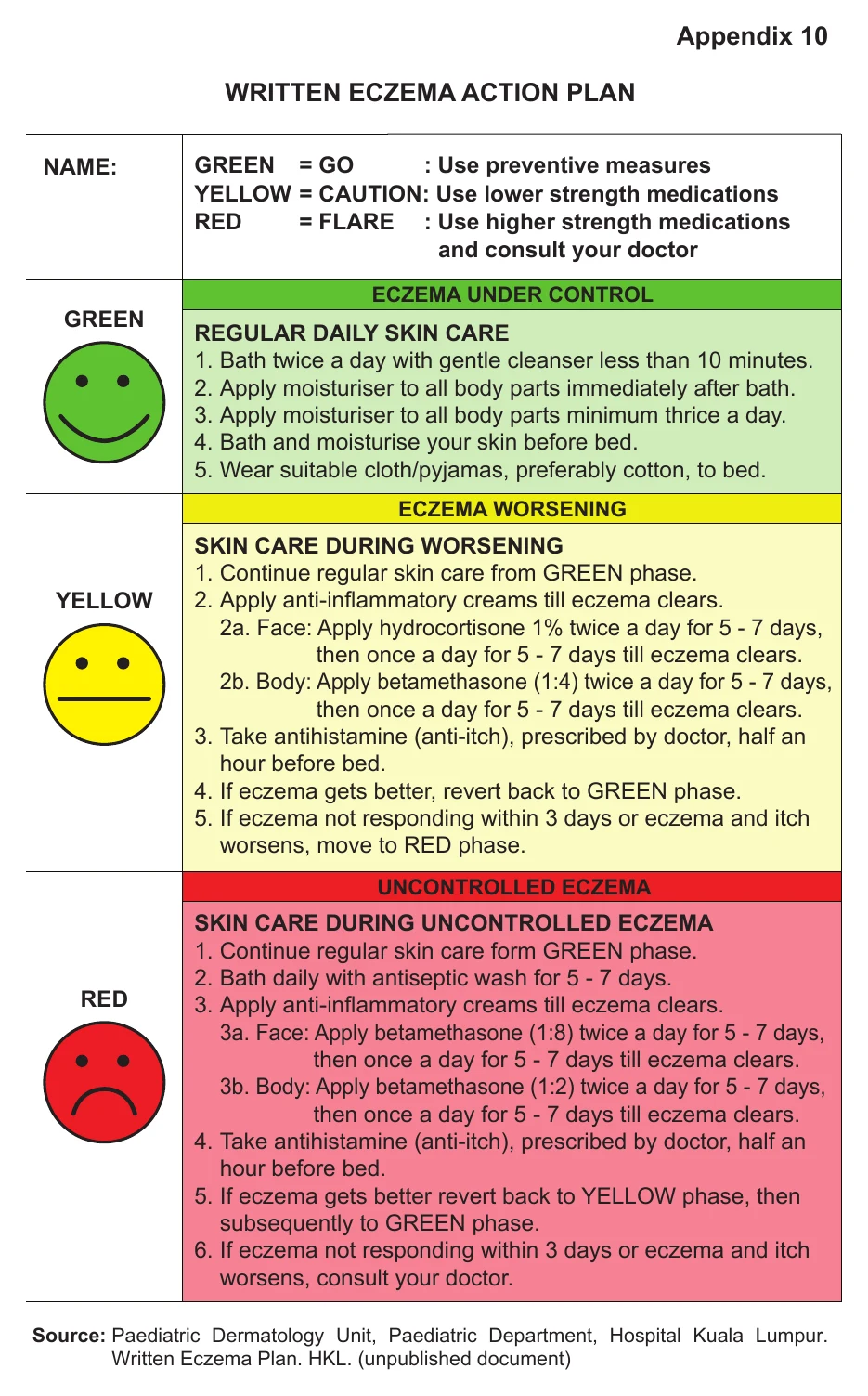
The same plan as text:
| Phase | What to do |
|---|---|
| GREEN = GO: Use preventive measures Eczema under control | Regular daily skin care 1. Bath twice a day with gentle cleanser less than 10 minutes. 2. Apply moisturiser to all body parts immediately after bath. 3. Apply moisturiser to all body parts minimum thrice a day. 4. Bath and moisturise your skin before bed. 5. Wear suitable cloth/pyjamas, preferably cotton, to bed. |
| YELLOW = CAUTION: Use lower strength medications Eczema worsening | Skin care during worsening 1. Continue regular skin care from GREEN phase. 2. Apply anti-inflammatory creams till eczema clears. 2a. Face: Apply hydrocortisone 1% twice a day for 5 - 7 days, then once a day for 5 - 7 days till eczema clears. 2b. Body: Apply betamethasone (1:4) twice a day for 5 - 7 days, then once a day for 5 - 7 days till eczema clears. 3. Take antihistamine (anti-itch), prescribed by doctor, half an hour before bed. 4. If eczema gets better, revert back to GREEN phase. 5. If eczema not responding within 3 days or eczema and itch worsens, move to RED phase. |
| RED = FLARE: Use higher strength medications and consult your doctor Uncontrolled eczema | Skin care during uncontrolled eczema 1. Continue regular skin care form GREEN phase. 2. Bath daily with antiseptic wash for 5 - 7 days. 3. Apply anti-inflammatory creams till eczema clears. 3a. Face: Apply betamethasone (1:8) twice a day for 5 - 7 days, then once a day for 5 - 7 days till eczema clears. 3b. Body: Apply betamethasone (1:2) twice a day for 5 - 7 days, then once a day for 5 - 7 days till eczema clears. 4. Take antihistamine (anti-itch), prescribed by doctor, half an hour before bed. 5. If eczema gets better revert back to YELLOW phase, then subsequently to GREEN phase. 6. If eczema not responding within 3 days or eczema and itch worsens, consult your doctor. |
Traditional and complementary medicine
- Some traditional medicine (not limited to CHM) contain prohibited substances (e.g. dexamethasone, mercury). Refer to http://npra.moh.gov.my for further information.
Recommendation 12
- Traditional and complementary medicine should not replace conventional therapy in atopic eczema.
When to refer
Section 13 of the CPG. The urgency for referral to a dermatologist:
1. Urgent referral (within 24 hours)
- AE with clinical suspicion of eczema herpeticum (eczema with widespread herpes simplex infection)
- AE with severe skin bacterial infection that requires intravenous antibiotics
- AE with acute erythroderma where the eczema is affecting more than 80% body surface area
2. Non-urgent referral
- Diagnostic uncertainty
- Severe or uncontrolled eczema:
- requirement of potent and very potent TCS
- frequent infections
- poor sleep or excessive scratching
- treatment failure with appropriate topical therapy regimen
- Parental concern
- Need for treatment demonstration/education
- Involvement of sites that are difficult to treat
- Psychological disturbance on the patient or family
Algorithm 1 (above) also refers every patient with IGA 4 to 5, a DLQI/CDLQI above 10, or no response to treatment.
Sources
- Malaysian Health Technology Assessment Section (MaHTAS), Medical Development Division, Ministry of Health Malaysia. Clinical Practice Guidelines: Management of Atopic Eczema. 2018. ISBN 978-967-2173-29-8. Key Recommendations; Algorithms 1 and 2; Sections 2-13; Recommendations 1-12; Appendices 3, 4, 7, 8, 9, 10 and 11. © MaHTAS. Reproduced unchanged with acknowledgement, as the CPG's copyright statement allows. MaHTAS